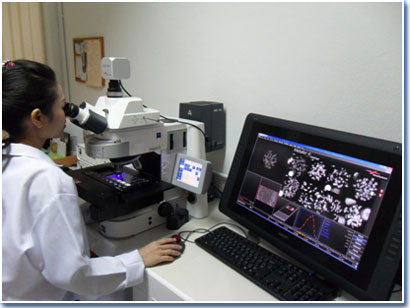
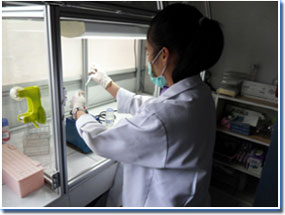
Newborns with congenital abnormalities may have a chromosomal cause. For example, a child with more chromosomes than normal, an extra chromosome 21, making 47 in total, has the condition we know well as Down syndrome. Detecting chromosomal abnormalities makes diagnosis more accurate and identifies exactly which condition it is, which benefits treatment and counseling for parents who wish to have another child. For chromosome testing, laboratory staff take the patient's blood sent from the hospital, culture the white blood cells, and stimulate them to divide so the chromosomes can be seen under a microscope. The chromosomes are then stained and arranged to analyze for abnormalities. In the past, this arrangement was done by photographing and cutting by hand.
Today we have computerized chromosome analyzers to assist the work, making it faster and more accurate. Preparing chromosomes and analyzing abnormalities must be done by specialists in this field; sometimes small abnormalities are missed by those without enough experience, so chromosomal abnormalities go unseen and the diagnosis differs from reality. The DNA Center laboratory has examined chromosomes from newborns since 1997, testing about 300-500 patients per year. Their blood samples come from hospitals across Thailand that have no chromosome laboratory specialists.